Our Story
We are a Kenyan based green coffee grower and exporter founded in 2025, working exclusively with smallholder farmer cooperatives across Kenya's coffee growing regions.
Rooted in the villages where coffee begins.
Our founder, Wanjiku Gachari, grew up on a coffee farm in Central Kenya and was able to pursue her education through her parents’ coffee income, supplemented by their civil service earnings. She understands the realities smallholder coffee farmers face in Kenya—such as the need for year‑round labor, high input costs, low and unstable incomes, price volatility, and limited information about when, where, and at what price their coffee is sold in the upper end of the international supply chain.
Wanjiku is a law and sociology graduate who spent 14 years working across Africa and Asia on human rights, child safeguarding, gender equality, community empowerment, and poverty reduction among refugee communities. She returned home to Nyeri with a clear purpose: to partner with smallholder farmers, including women‑led cooperatives, in her hometown and other coffee‑growing regions, and to share freshly harvested, high‑quality, single‑origin Kenyan Arabica coffee with ethically conscious buyers around the world.
Our name, “Itura” means village or specific locality in the Kikuyu language. It reflects our commitment to working closely with smallholder farmer groups in specific communities, and with like‑minded coffee buyers who care about creating real, measurable social and environmental impact in Kenya’s coffee‑growing regions.
We do not source from estates or plantations.
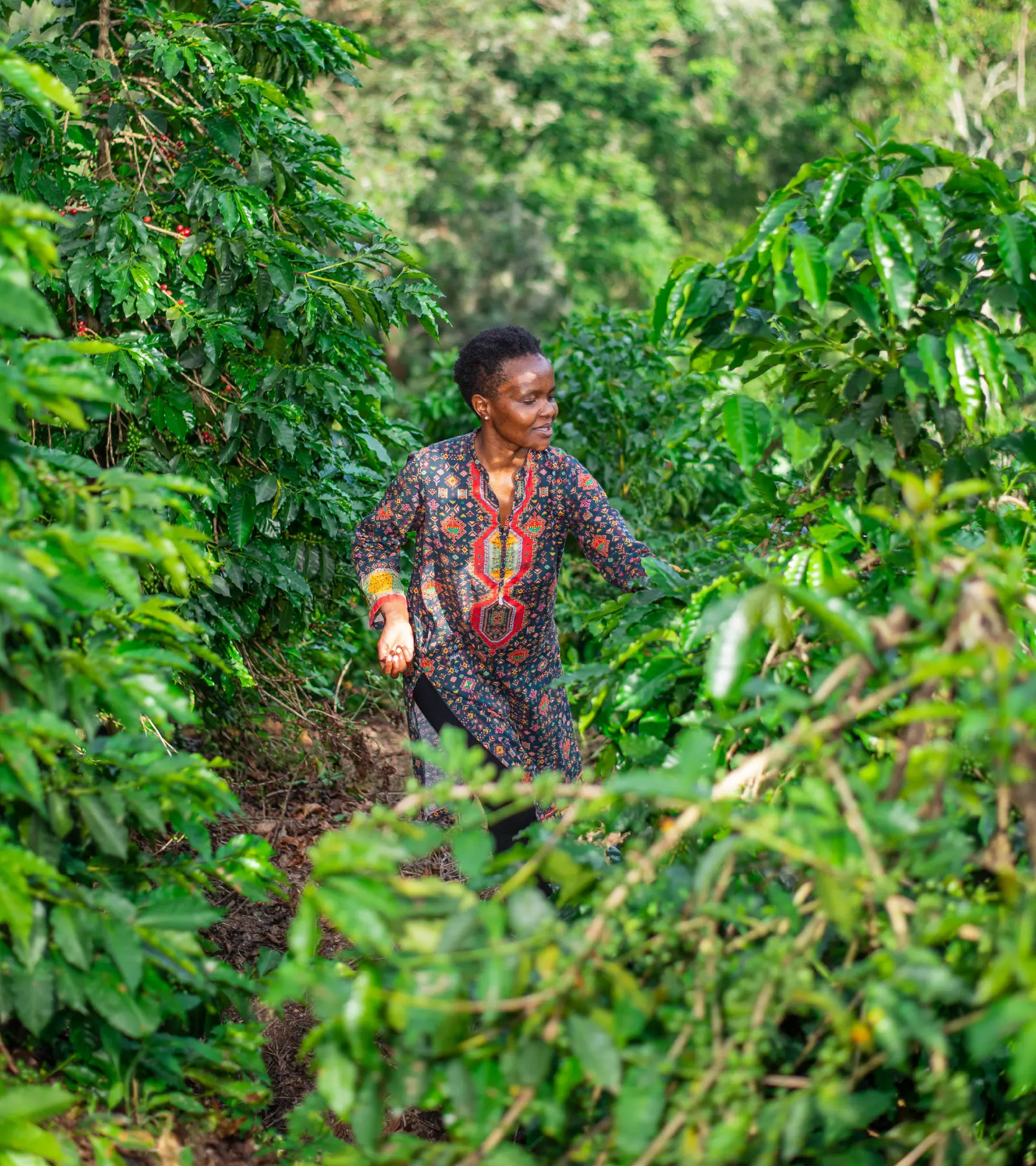
Wanjiku at her parent’s coffee farm in Kirinyaga, Kenya.
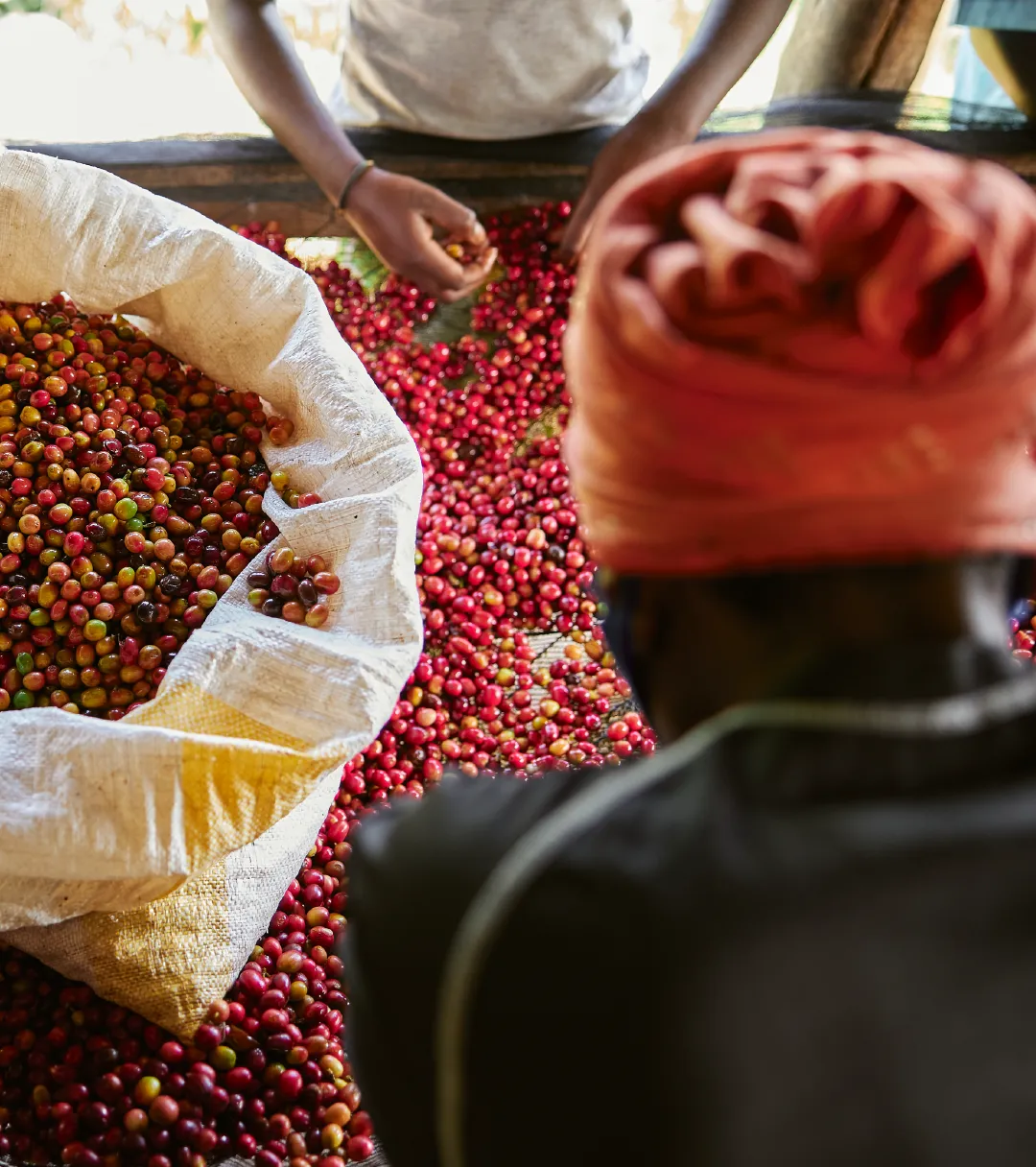
Workers sorting coffee cheries.
Our Vision & Values
Our vision is to work with buyers who share our commitment to social impact, bringing them freshly harvested, sustainably grown, fully traceable single‑origin Kenyan coffee. We aim to create real, independently verified improvements in sustainable farming practices, fairer incomes for producers, and better living standards — supporting long‑term progress and greater social mobility in rural coffee‑growing communities in Kenya.
As a company, we build relationships that go far beyond buying and selling coffee. Our focus is on creating meaningful social and environmental benefits while running a business that is truly sustainable.
We are excited to grow a culture of partnership from the ground up — one rooted in openness, curiosity, collaboration, trust, and reliability.
Kenya's Coffee History
In global conversations, large coffee estates are often linked to monocropping, soil degradation, reduced food production, deforestation risks, and other environmental concerns. In Kenya, these estates also carry a painful history. Many were created during the British colonial period through the forced removal of indigenous communities across Central, Eastern, Rift Valley, and Western Kenya. Families were displaced from their land, placed in concentration villages, and made to work on settler‑owned coffee estates — often including children. At the same time, the colonial government banned indigenous communities from growing coffee or tea.
These confiscated farmlands were renamed the “White Highlands,” known for their fertile volcanic soils, cool climate, and low malaria risk, and were reserved exclusively for white settlers.
After independence in 1963, Kenya began a national land restitution program. Many displaced families received land and official ownership documents, restoring their rights. Widows whose husbands died in the struggle for independence were also included. Clan elders and extended families helped ensure every affected household was counted — including young men who never returned from the forests where liberation movements operated. While some settler estates were returned to local communities, others remained under Christian missionary organizations or were taken over by powerful post-independence political figures and their associates. Some were later sold to large corporations, and over time, the history of how these vast indigenous farmlands changed hands has become blurred or forgotten.
Today, not all displaced families in Kenya’s coffee‑growing regions have been compensated. Some remain landless generations later. Many villages near large estates are still home to families seeking to reclaim their ancestral land. They often rely on working on the same estates where their parents and grandparents labored, and their living conditions continue to reflect injustices from six decades ago.
Because we recognize this history, Itura Coffee chooses to work only with smallholder farmers and the cooperatives they have built and manage — where women farmers also have meaningful, independently verifiable roles in leadership and decision‑making.
More than 95% of the farms we work with have been owned and cared for by the same families for over 60 years.
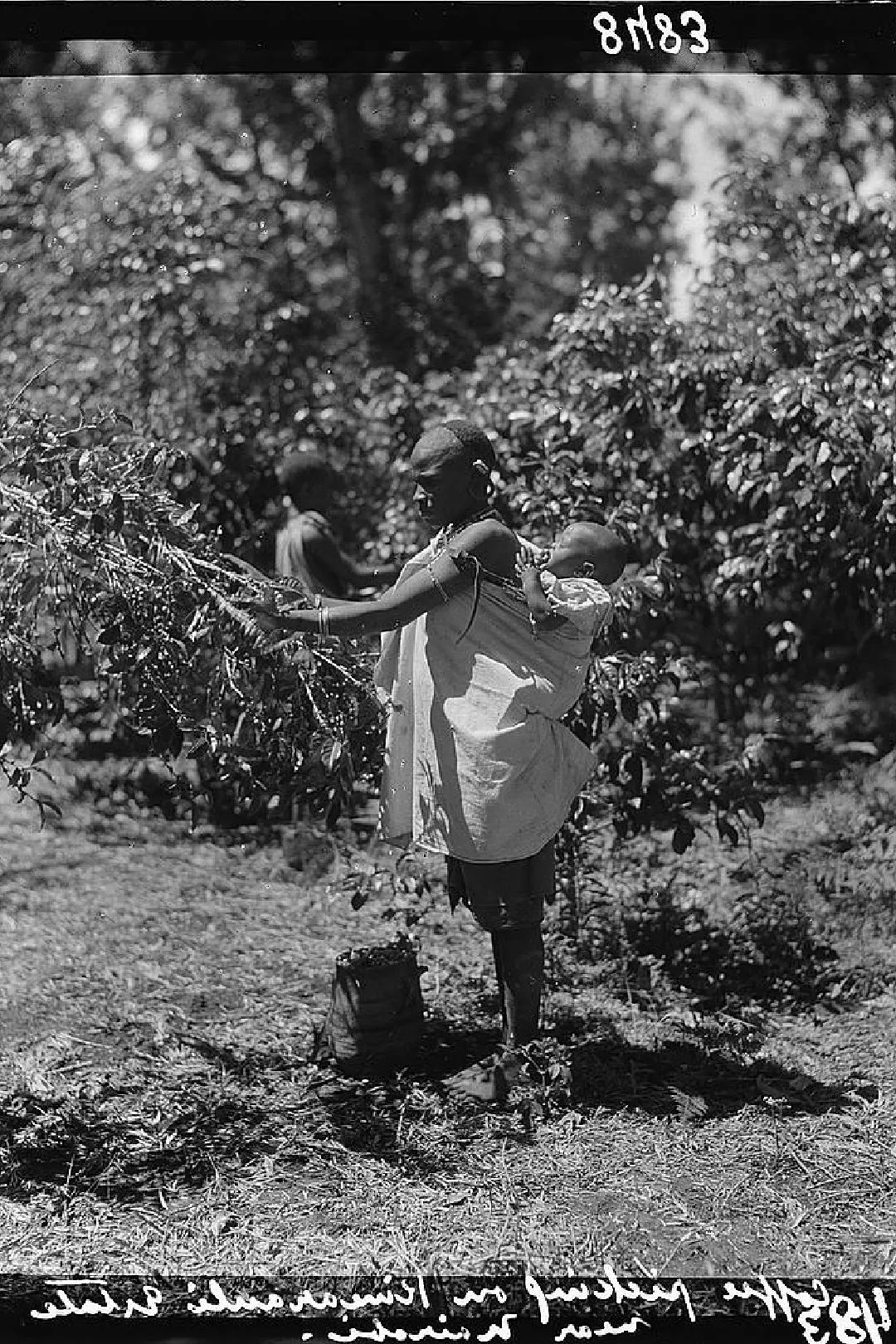
A native woman, carrying her child on her back, is depicted picking coffee on a plantation in Kenya Colony. This image reflects the agricultural practices and daily life in colonial Kenya.
Get in touch
Let's talk coffee
Whether you’re a roastery exploring a new single‑origin program, a coffee shop looking for fully traceable microlots, or a buyer interested in sustainability collaboration, we’d be glad to hear from you.
Samples, Orders & B2B Inquiries
For lot enquiries, cupping samples, pricing enquiries and placing orders.
General Enquiries & Partnerships
For sustainability collaborations, field visits, press and all other enquiries.