Sustainability Initiatives
Our goal is to ensure that producing and consuming Kenyan coffee leads to real socioeconomic benefits for farmers through fairer distribution of revenues.
Towards Verifiable Social Impact
Coffee is enjoyed worldwide, yet smallholder farmers — who produce 60% of the global supply — face growing challenges from low returns to the effects of climate change. That’s why we intentionally nurture partnerships with ethically minded buyers who value high‑quality, single‑origin coffee with a verifiable backstory and who seek to collaborate for third-party verifiable social impact.
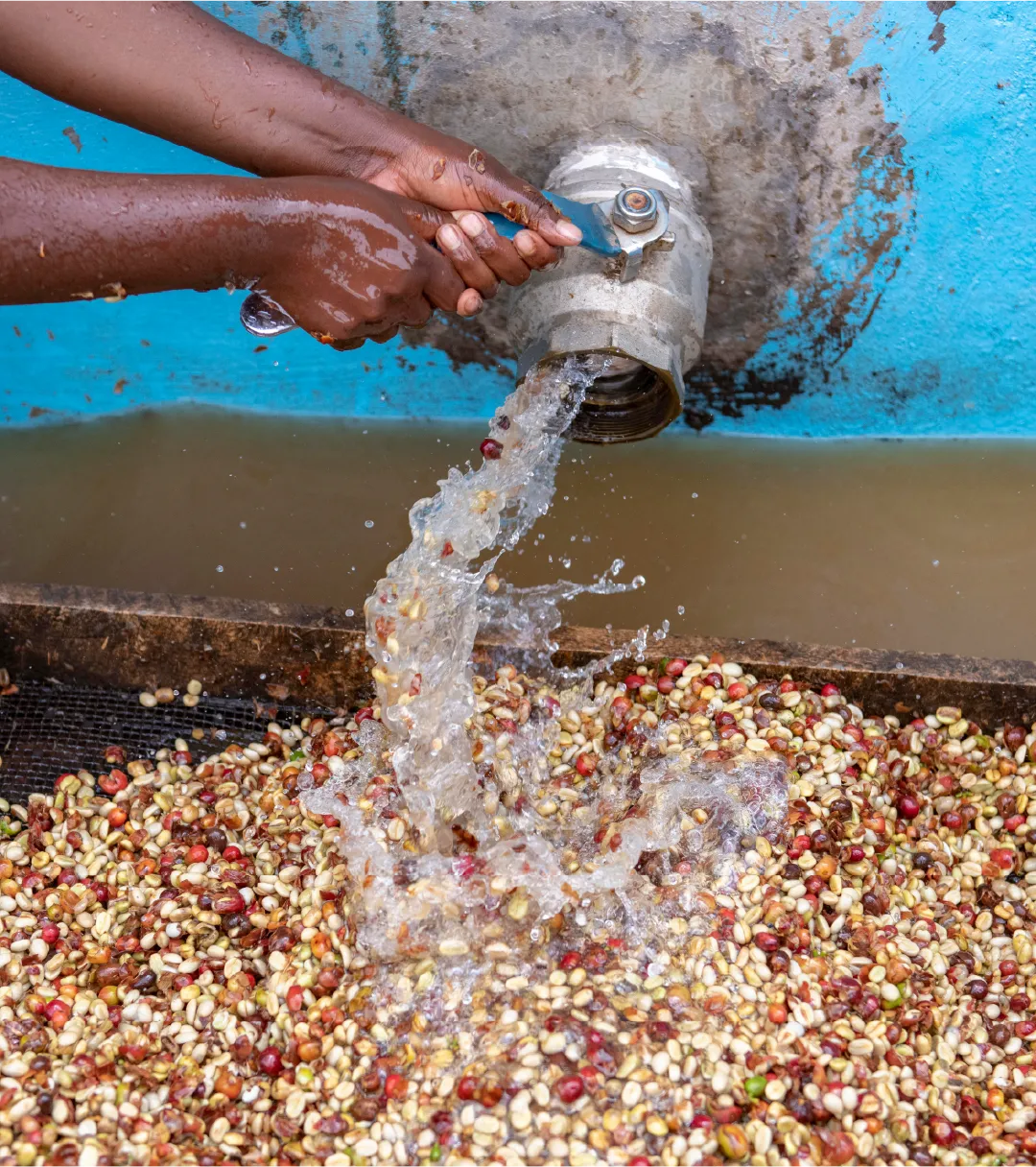
Water usage at a coffee washing station.
Water conservation
All our coffees are processed using the wet method, which creates clean and distinct flavor profiles but requires large amounts of water and produces wastewater that can harm local environments. Our producers recognize the need to use water more efficiently and manage wastewater responsibly.
From our discussions with cooperatives, we’ve learned that the biggest challenge is the high cost of installing water recycling plants, even though reliable technology exists in Kenya. Redirecting income toward such projects is difficult because farmers rely on their coffee earnings to cover farm inputs, wages and family living costs.
We see this resource challenge as an opportunity to collaborate with like‑minded buyers on sustainability projects in selected areas. By working through farmer cooperatives, we can support producers in improving water conservation while continuing to use the wet processing method that defines Kenya’s coffee quality.
Organic fertilizer from coffee pulp
The wet processing method produces large amounts of coffee pulp waste, especially during the peak harvest season from October to December. Many of our producers now recycle this pulp into organic fertilizer, collecting it for free from nearby washing stations.
To make compost, farmers mix the pulp with animal manure — something widely available since most families keep at least one dairy cow for fresh milk. Spread across the soil, it enriches the ground and restores nutrients that coffee trees need as they prepare for the next season. This organic option has also greatly reduced the need for costly chemical fertilizers while regular soil enrichment has also improved household food production, with farmers able to grow other crops alongside coffee bushes such as plantains, a common source of carbohydrates in Kenyan homes.
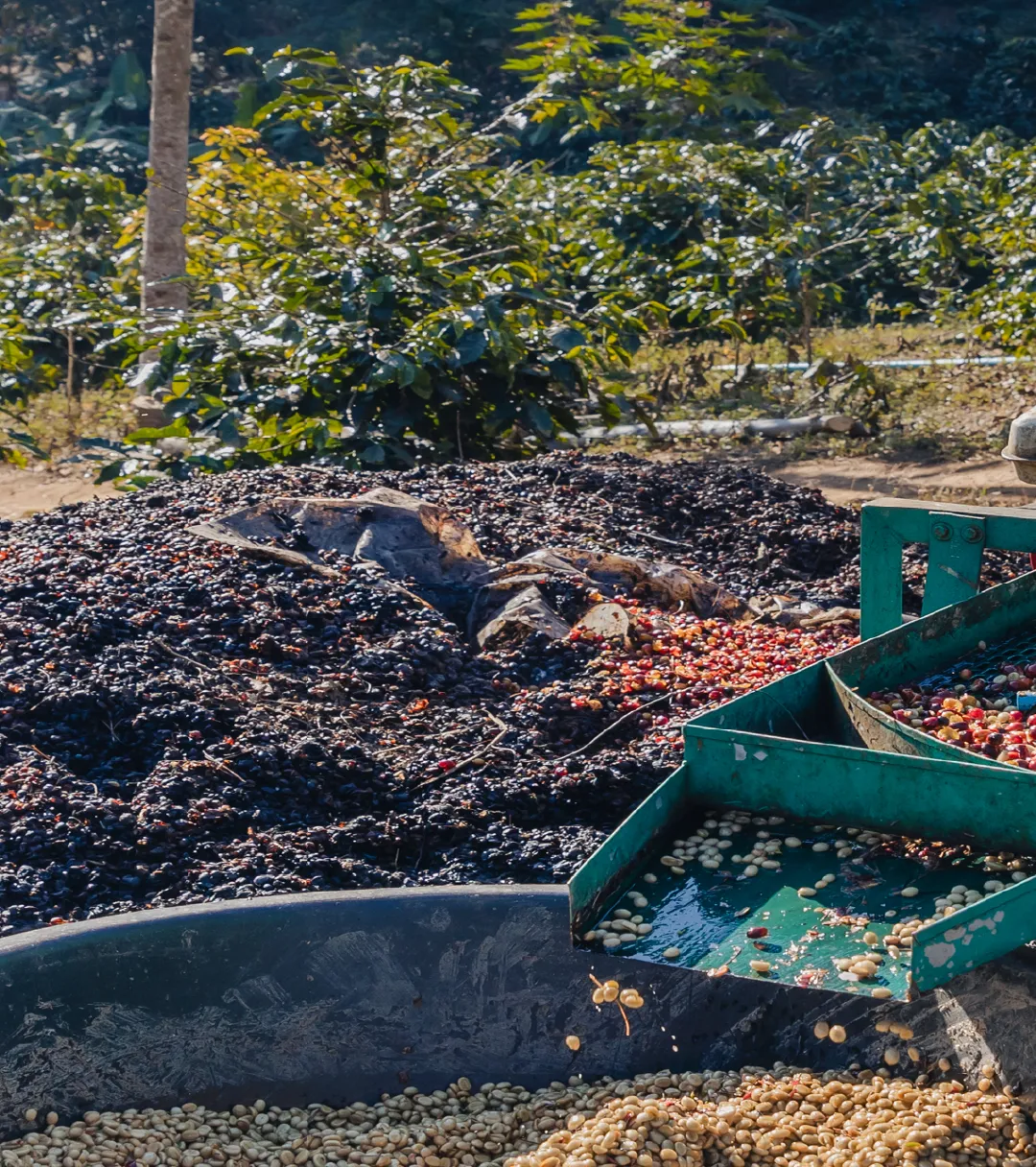
Coffee pulp waste decomposing into organic fertilizer
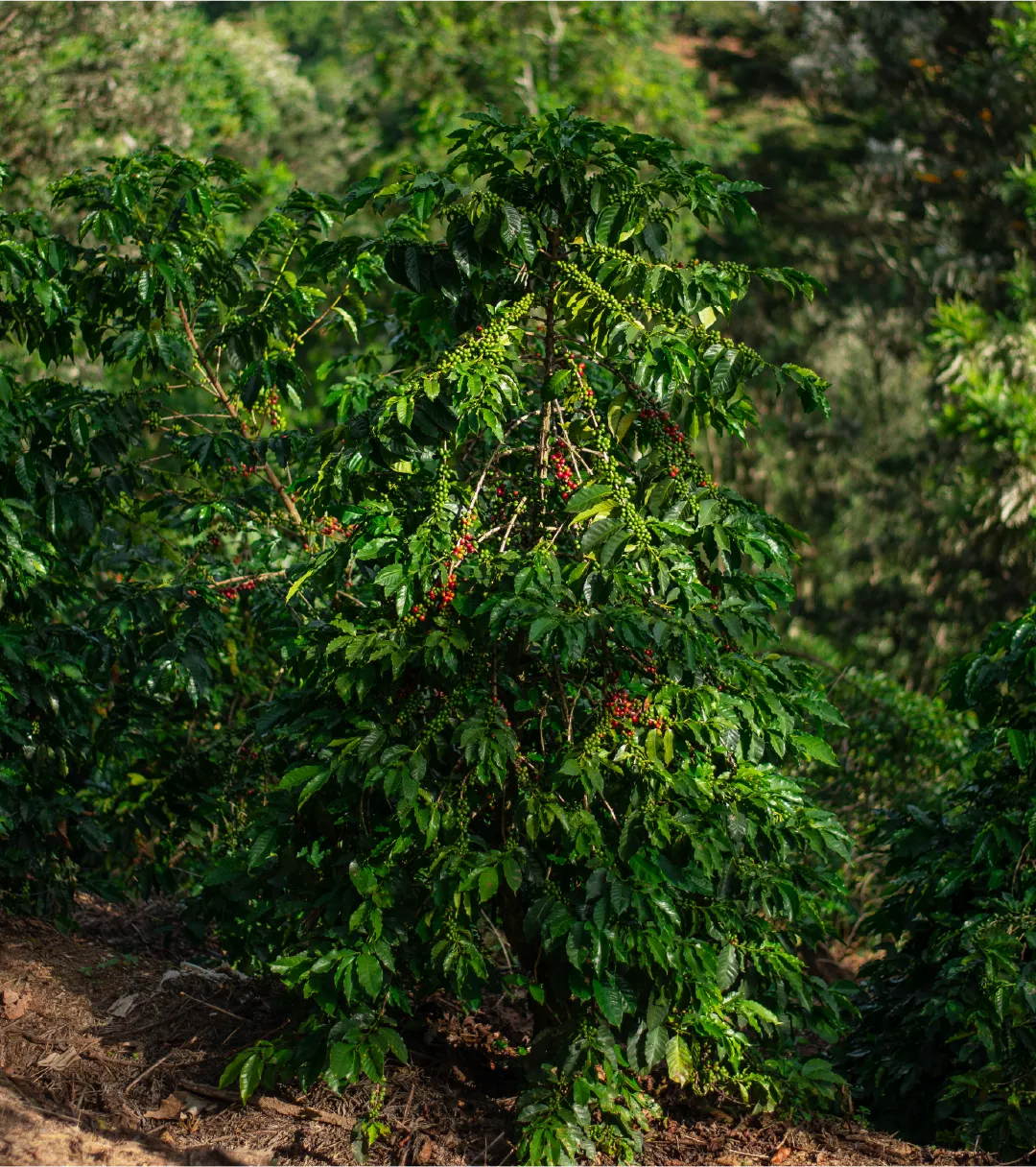
High yield Ruiru 11 variety coffee tree in a farm in Nyeri, Kenya
Climate resilient adaptations
Awareness of pesticide risks has grown in recent years, supported by rising education levels since Kenya introduced free primary and secondary schooling. Today, many of our producers understand how pesticides can harm their health, their families, their workers, the soil, water sources, and even the value of their coffee in international markets. Government and civil society groups have played an important role in sharing this knowledge with both coffee producers and the public as consumers.
As a result, more and more farmers in our sourcing cooperatives are grafting the Ruiru 11 variety onto their K7, SL28, and SL34 trees. Grafting is a practical solution because farmers do not lose income while waiting for new seedlings to mature. It also avoids expanding coffee‑growing land, allowing families to keep using that space for food crops or agroforestry.
Ruiru 11 — developed in Kenya — is disease‑resistant, high‑yielding, and responds well to organic fertilizers, making it a strong choice for sustainable coffee production.
Get in touch
Let's talk coffee
Whether you’re a roastery exploring a new single‑origin program, a coffee shop looking for fully traceable microlots, or a buyer interested in sustainability collaboration, we’d be glad to hear from you.
Samples, Orders & B2B Inquiries
For lot enquiries, cupping samples, pricing enquiries and placing orders.
General Enquiries & Partnerships
For sustainability collaborations, field visits, press and all other enquiries.